

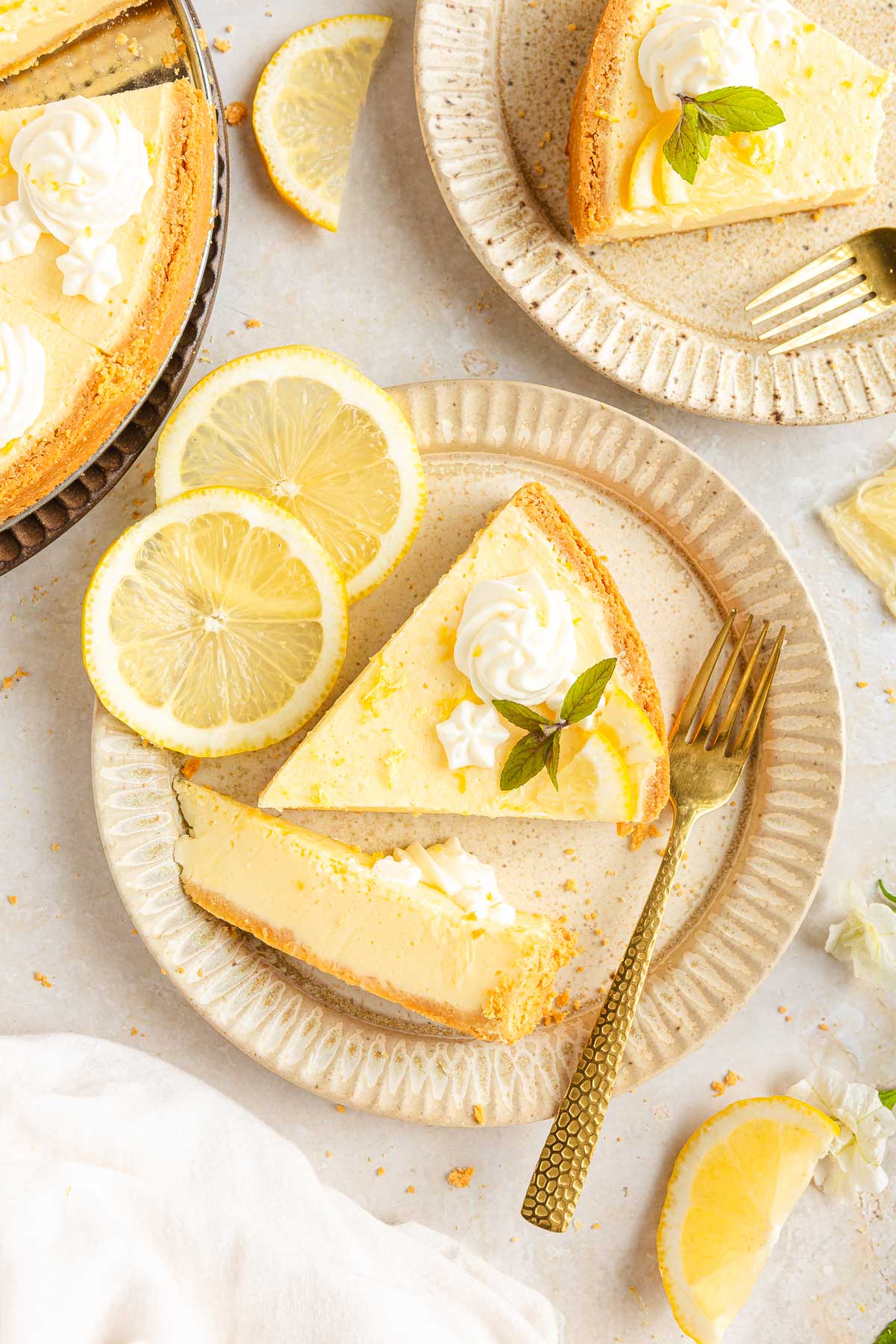
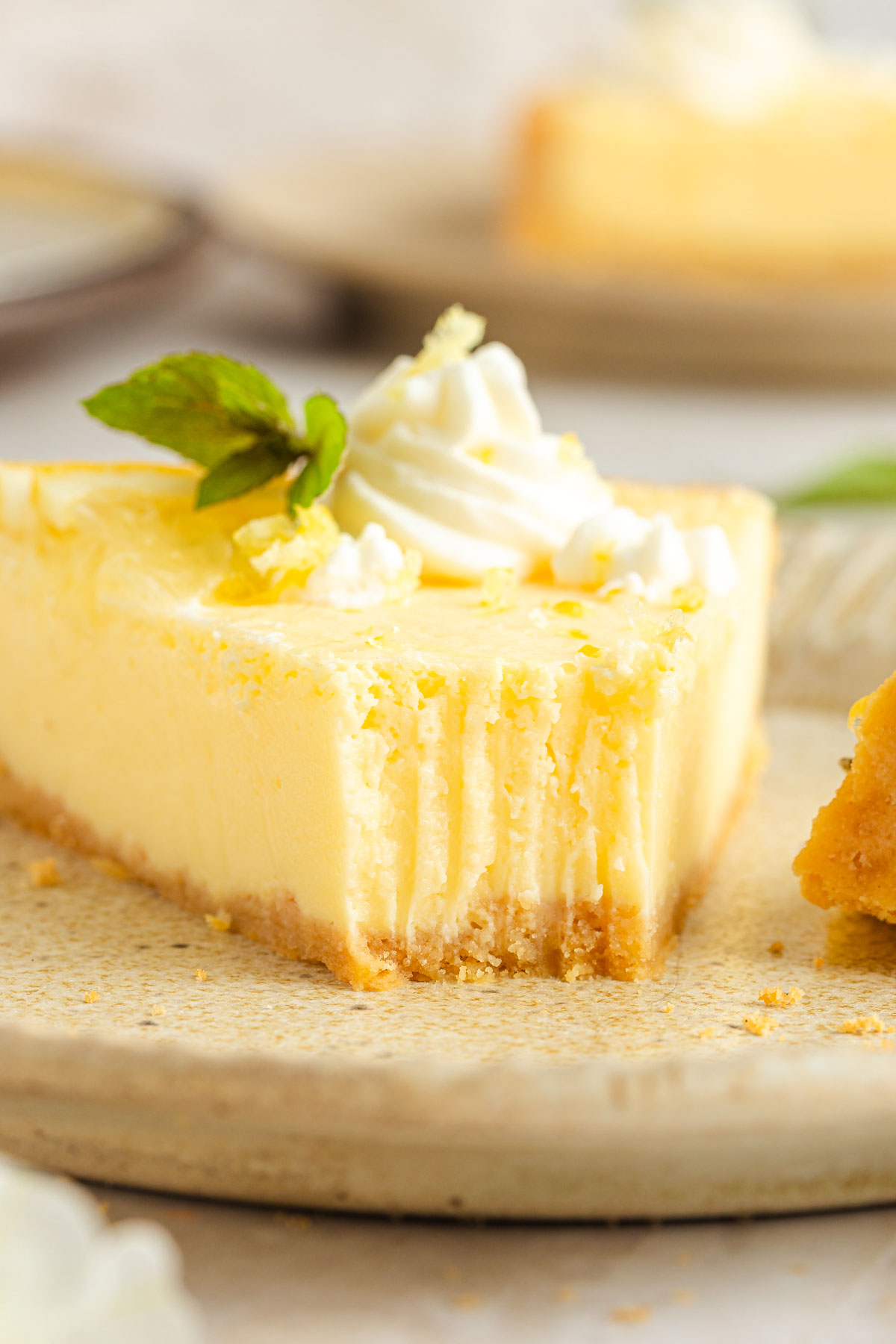
I used to call this dessert a lemon cheesecake, but there's actually something much closer to a silky lemon mousse tart hiding underneath those cheesecake swirls! The filling is creamy, tangy, and packed with fresh lemon flavor, while the almond flour pastry gives every slice a lovely contrast in texture. I finish the whole thing with piped cream cheese topping, and it just happens to be sugar-free, low-carb, and keto-friendly too.
Ingredient Notes
A few ingredients make a big difference in the texture and flavor of this sugar-free lemon mousse tart:
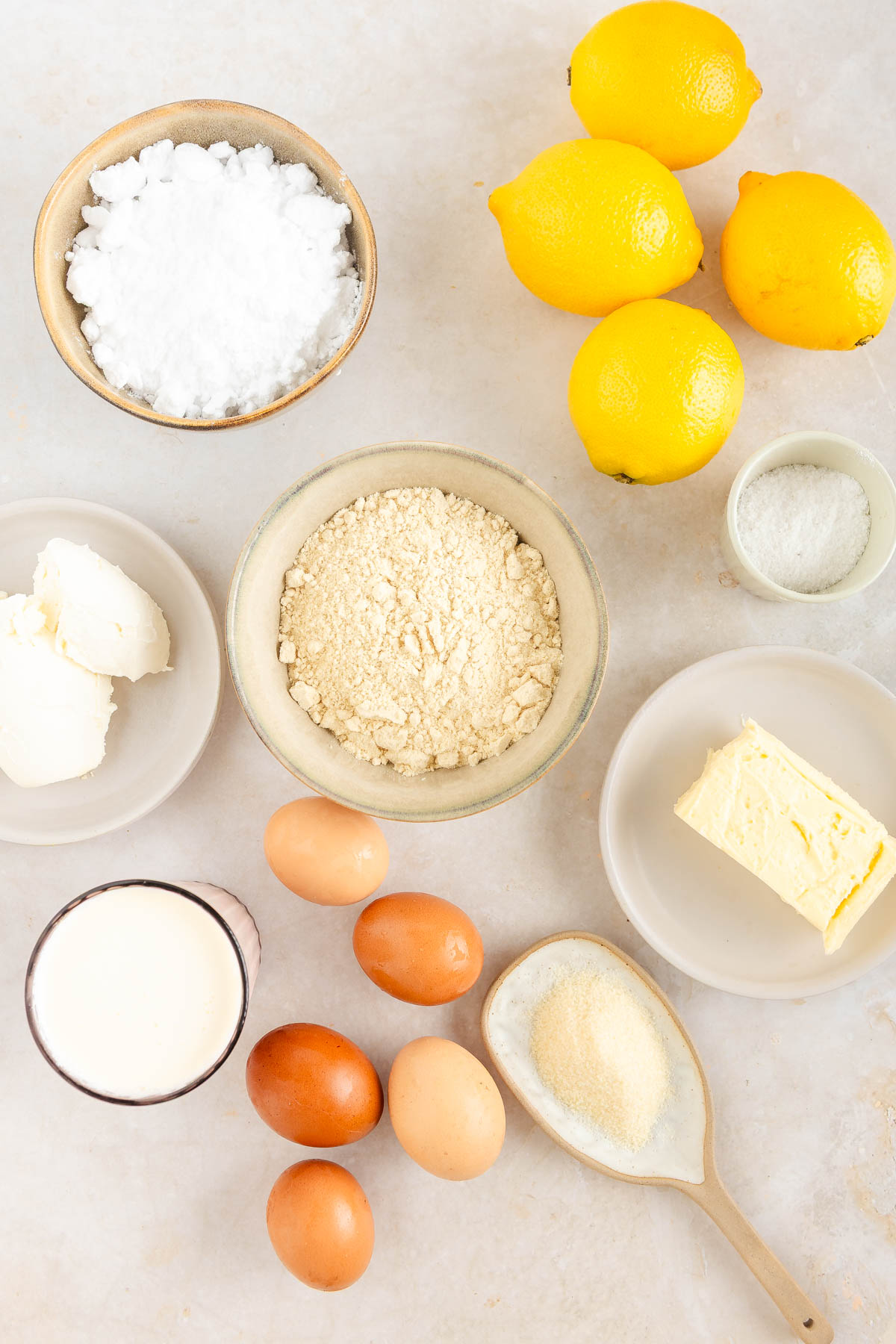
Almond flour: Use finely ground almond flour for a smooth, shortbread-like crust that holds together when sliced. Coarser almond flour can make the pastry more crumbly.
Allulose: I use allulose in the lemon filling because it dissolves smoothly without the cooling aftertaste some sugar alternatives can have. (If allulose isn't available where you live, as is the case in the EU, check out my sugar-free sweetener guide for alternative options.)
Fresh lemons: You'll need both fresh lemon juice and zest. The zest adds those fragrant citrus oils, while the juice gives the filling its bright, tangy flavor.
Gelatin: Gelatin helps the creamy lemon filling set firmly enough to slice without making it rubbery. I use gelatin sheets, although powdered gelatin can be substituted.
Cream cheese: This is actually used in the topping rather than the lemon filling. Bring it to room temperature before whipping it with the cream and monk fruit sweetener for the smoothest texture.
⭐ Mousse tarts require precise measurements to ensure the right texture. For more detailed guidance on measuring the ingredients accurately, see How To Measure Recipe Ingredients (With Printable Chart).
How to Make Sugar-Free Lemon Mousse Tart
Make the Almond Flour Crust
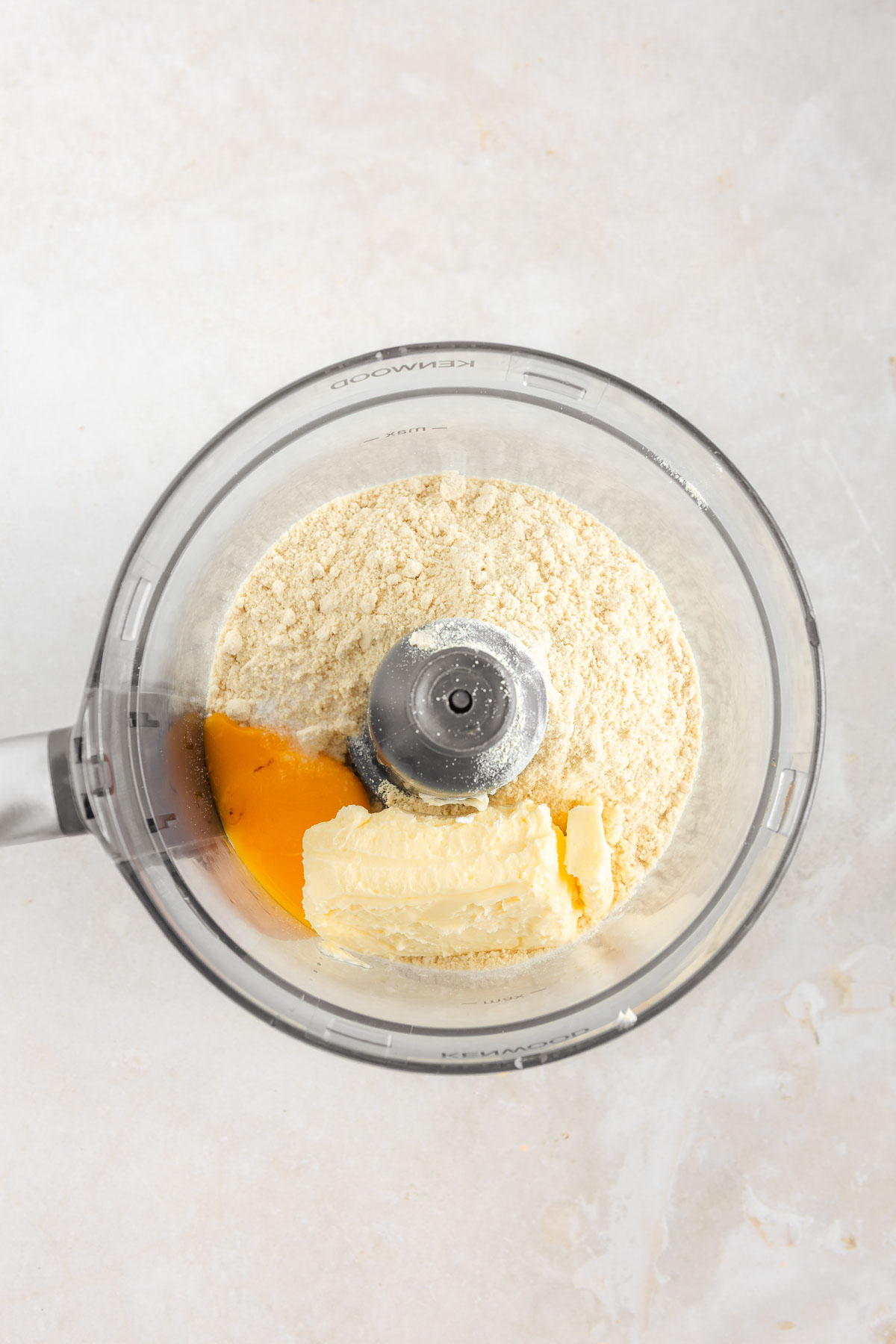
Add the almond flour, salt, and butter to a food processor and mix until the texture resembles shortcrust pastry.
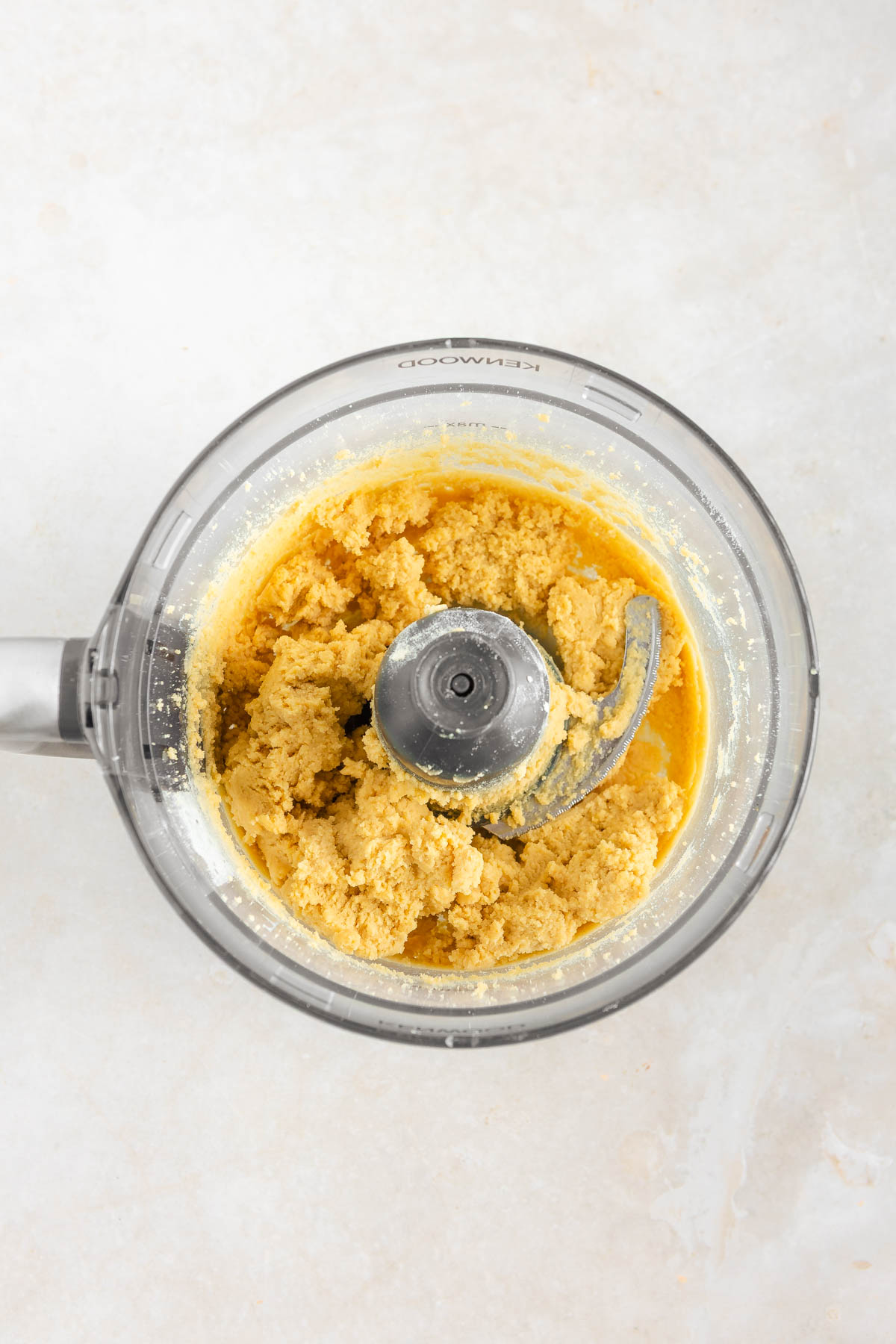
Add the egg yolk and process again. The dough will be slightly sticky.
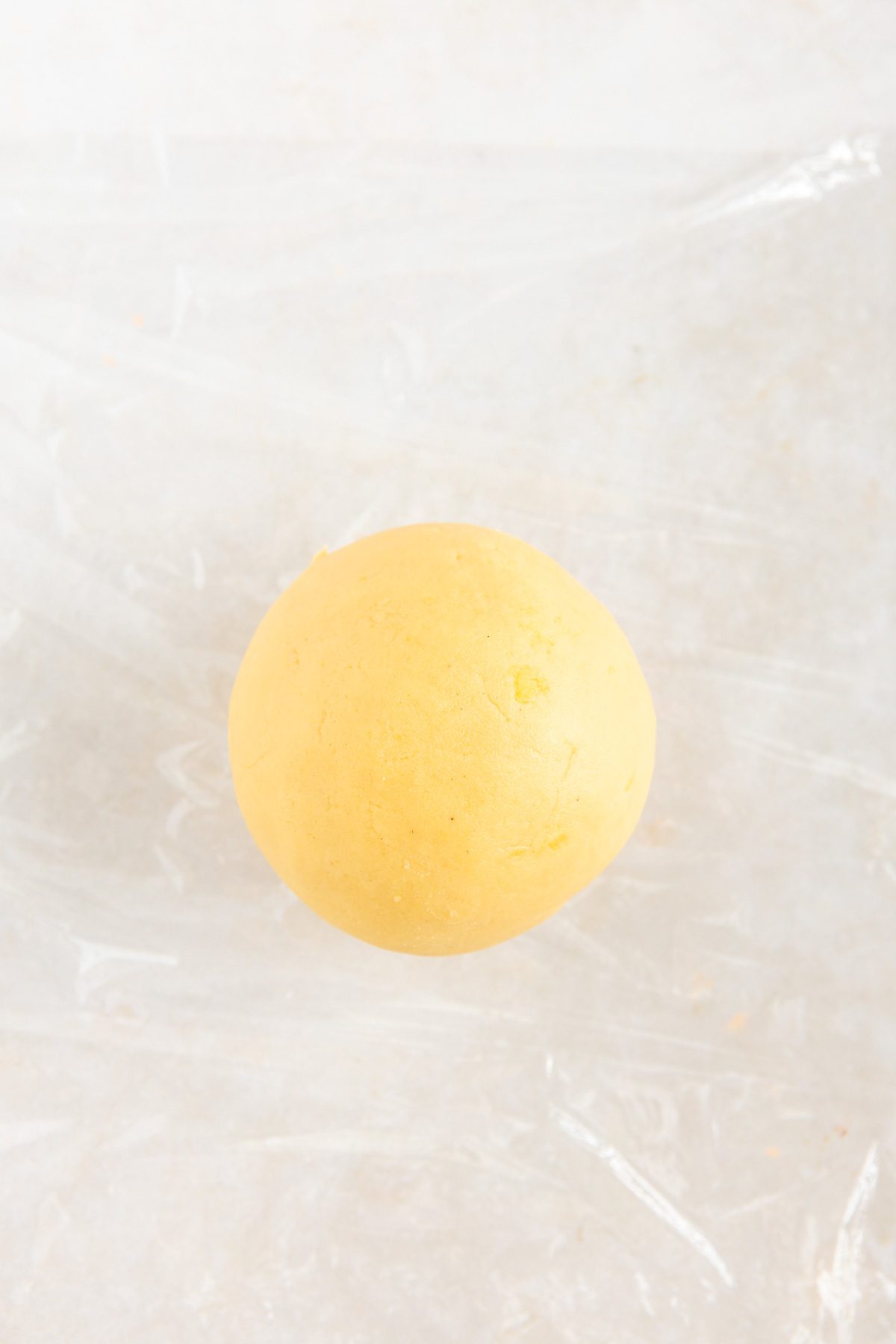
Shape the pastry into a ball, wrap it, and refrigerate for 30 minutes.
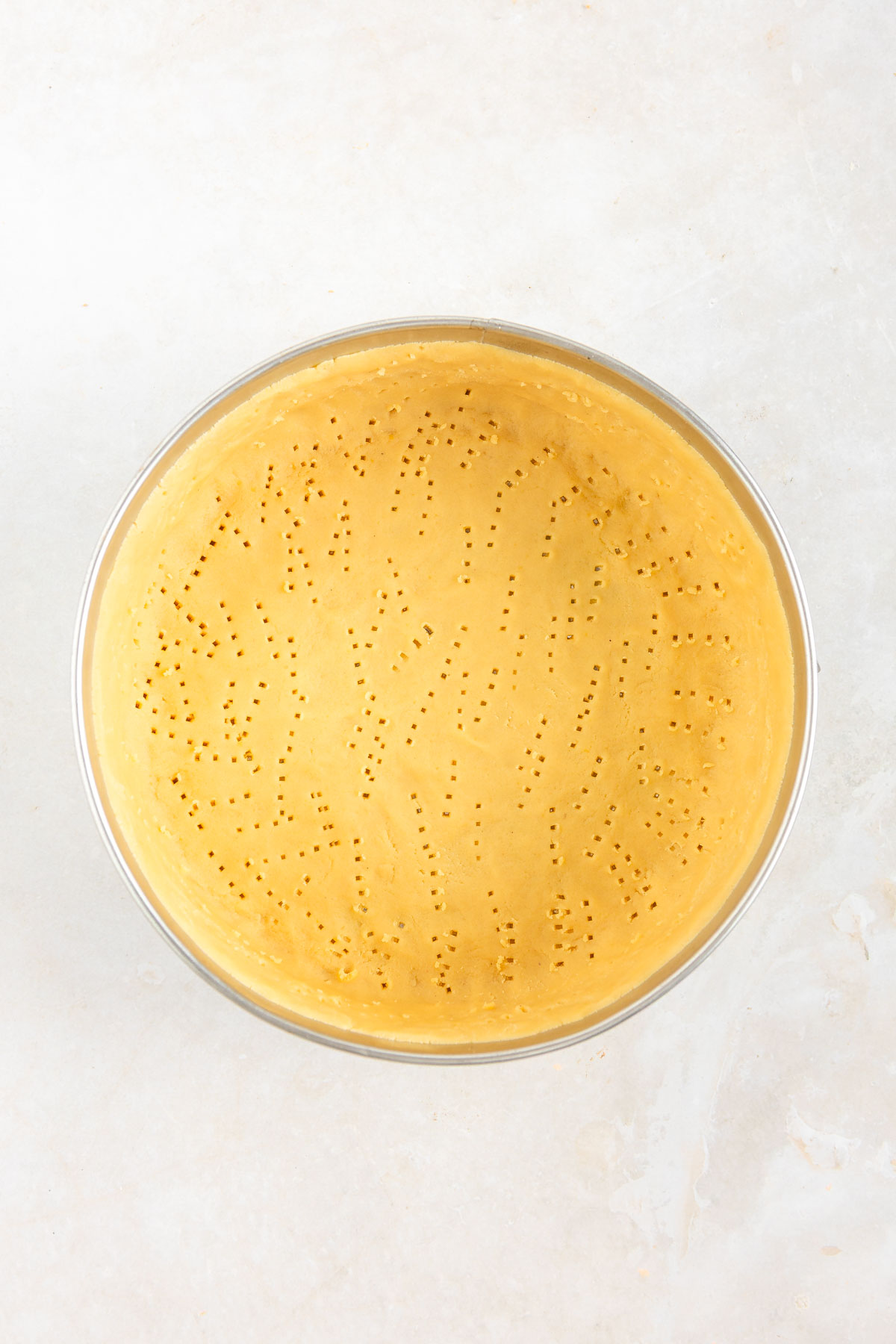
Once chilled, press it evenly across the bottom and up the sides of an 8-inch (21 cm) springform pan. Prick the bottom with a fork, then refrigerate for another 15 minutes while the oven preheats to 355°F (180°C).
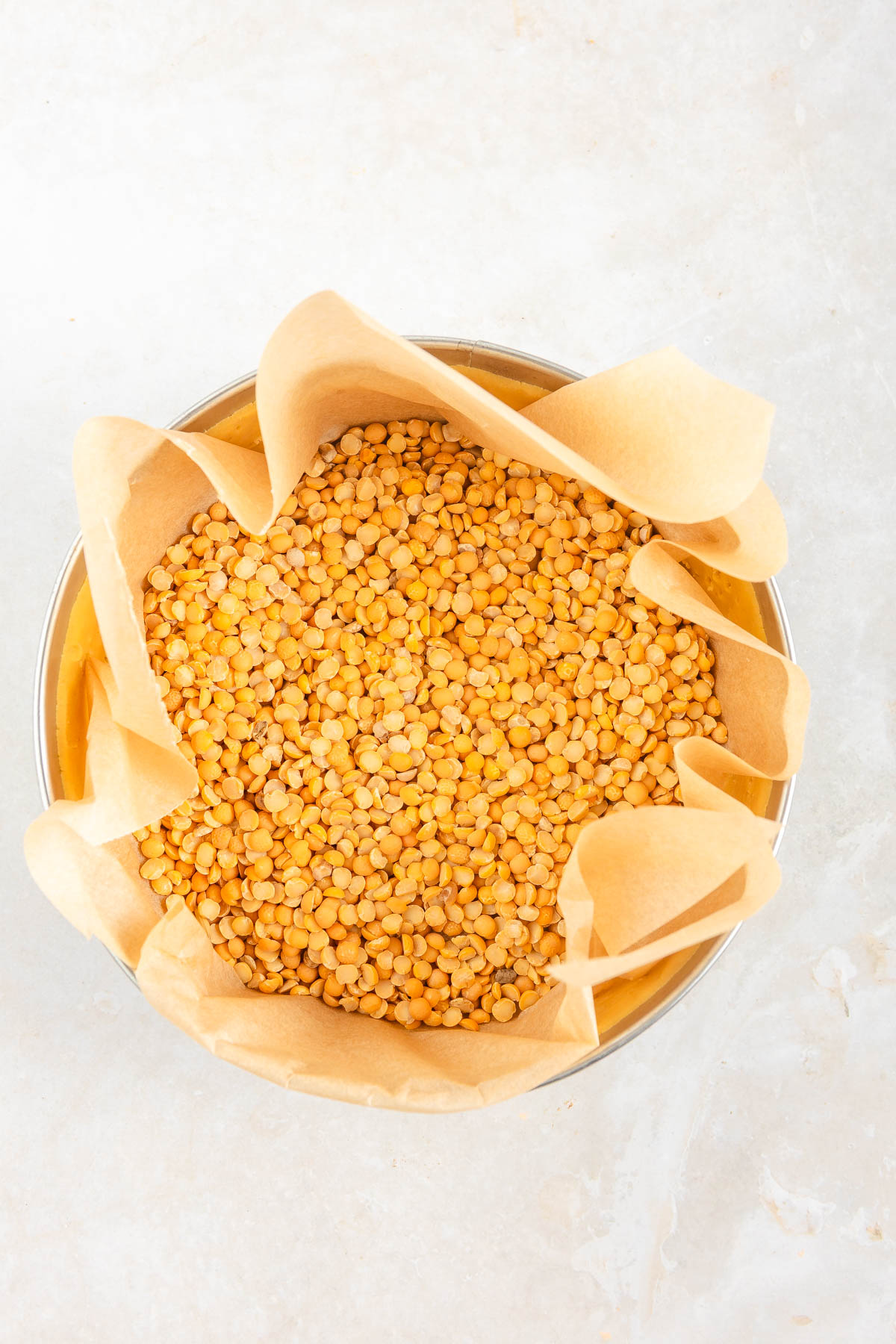
Cover the pastry with parchment and add ceramic baking beans or rice. Blind bake for 15 minutes, remove the weights and parchment, then bake for another 5-7 minutes, or until golden.
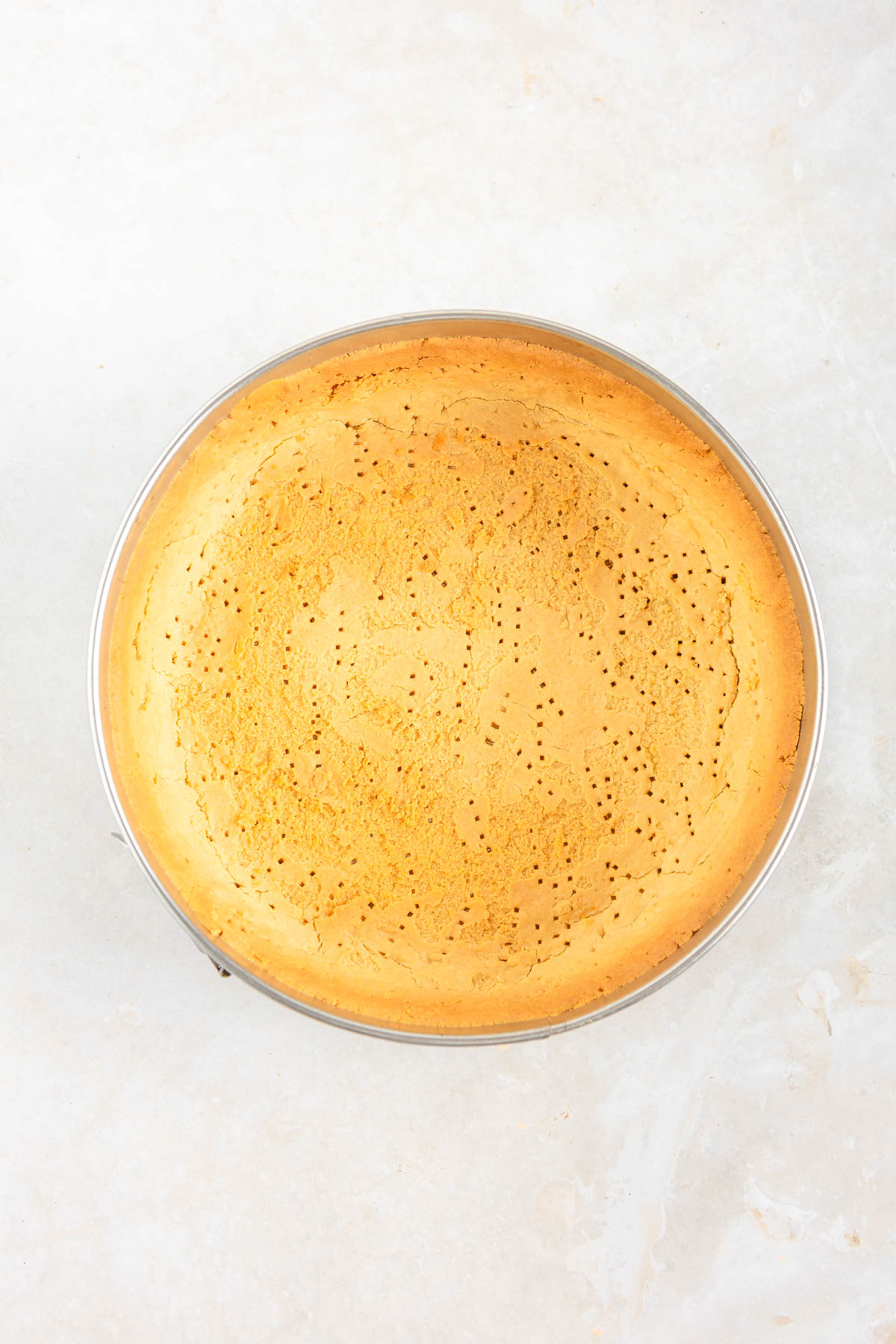
Let the crust cool completely before adding the filling.
Make the Silky Lemon Filling
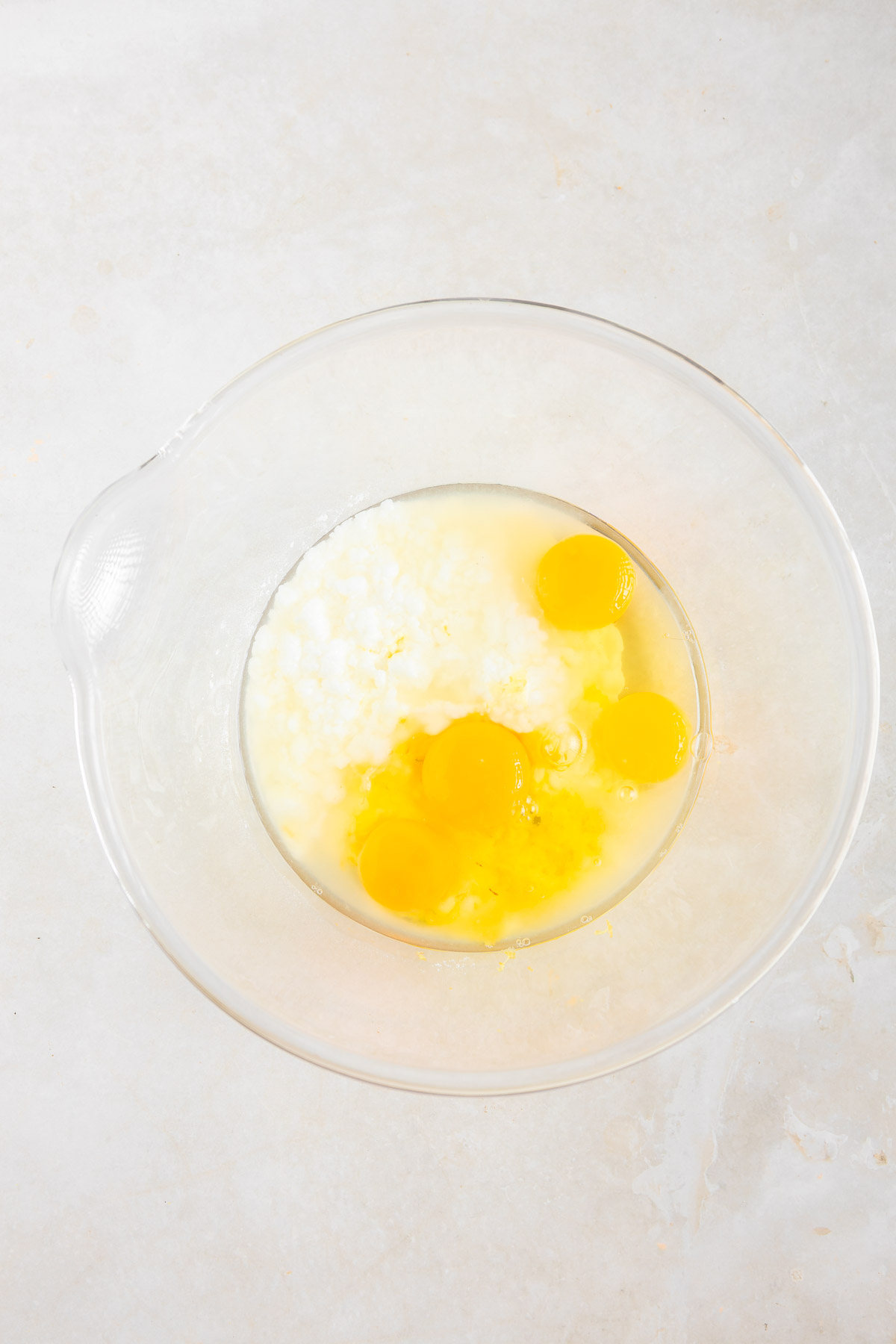
Combine the allulose and freshly grated lemon zest in a bowl or directly in a small saucepan and mix them well. Stir in the eggs and fresh lemon juice, followed by the heavy cream.
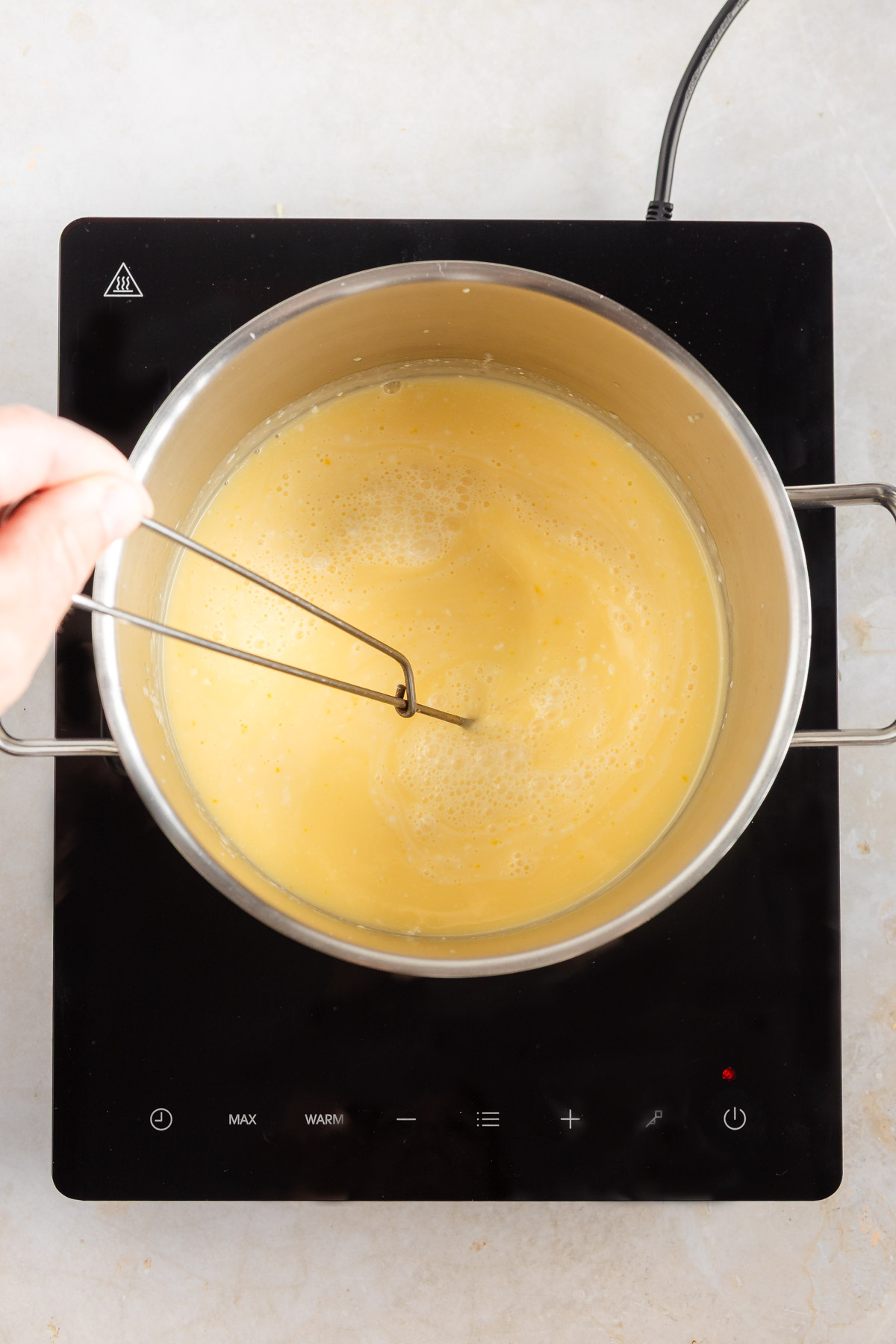
Heat the mixture gently over low heat, stirring constantly. When it reaches 105°F (40°C), strain it through a fine-mesh sieve to remove the lemon zest.
Return the mixture to the heat and continue stirring until it reaches 185°F (85°C). Remove it from the heat, immediately add the gelatin sheets, and stir for 2-3 minutes until completely dissolved.
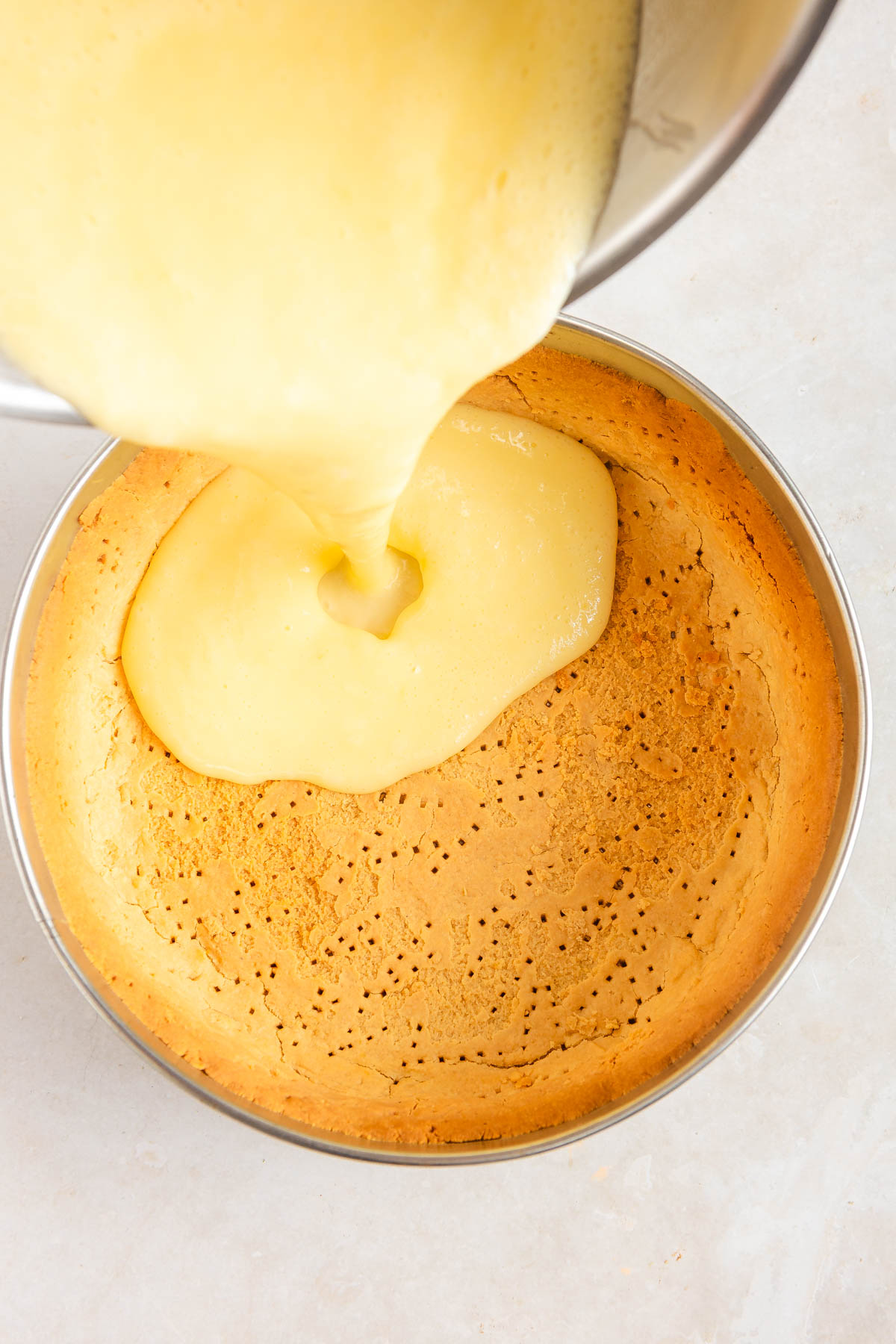
Pour the silky lemon filling into the cooled almond flour crust and refrigerate for about 10 minutes, or until the surface begins to set. Carefully trim any excess crust, release the sides of the springform pan, and return the tart to the refrigerator while you prepare the topping.
Add the Cream Cheese Topping
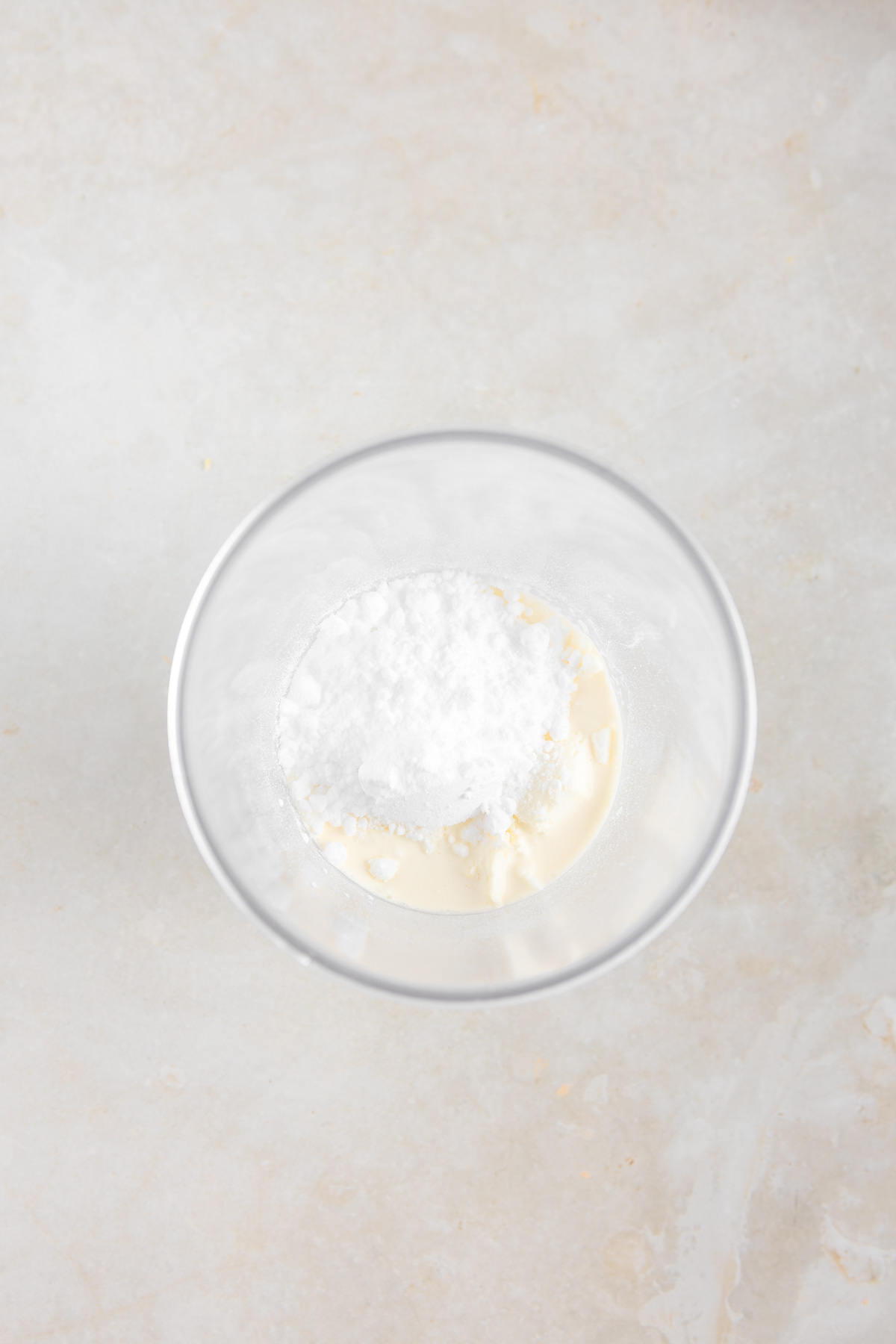
Combine the room-temperature cream cheese, monk fruit sweetener, and heavy cream in a large bowl.
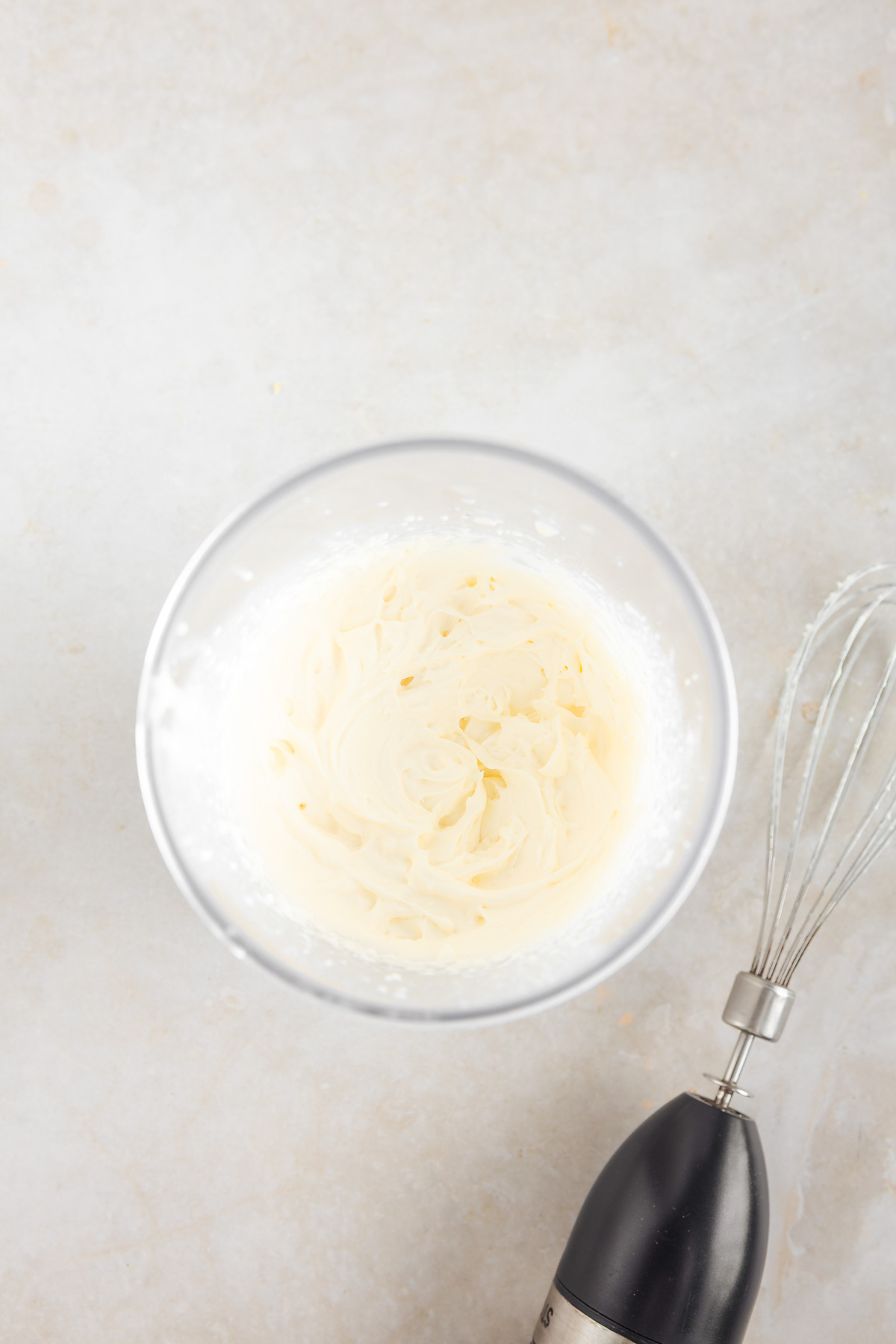
Beat with an electric mixer on medium speed until smooth and soft peaks form.
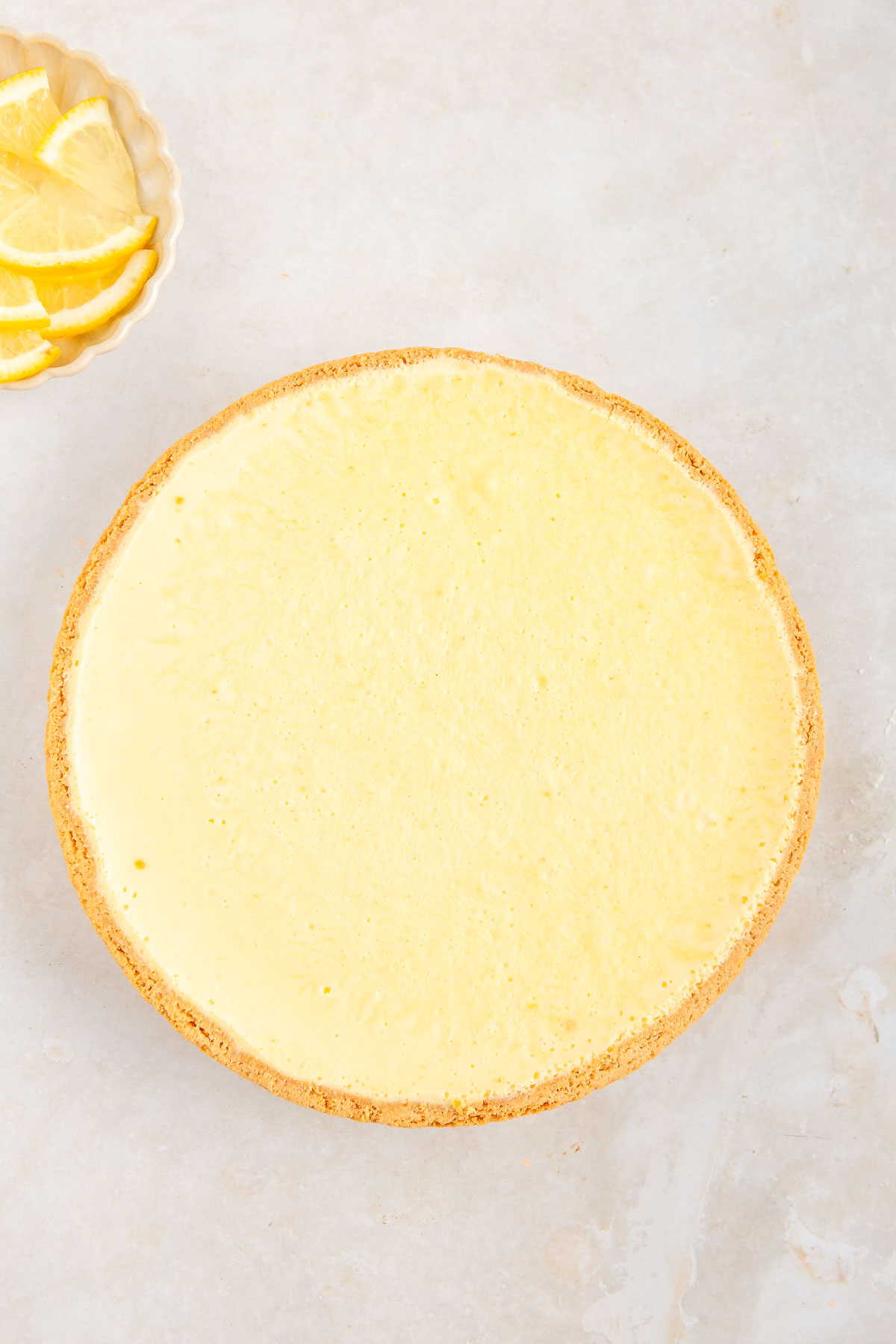
Take out the tart from the fridge and start decorating.
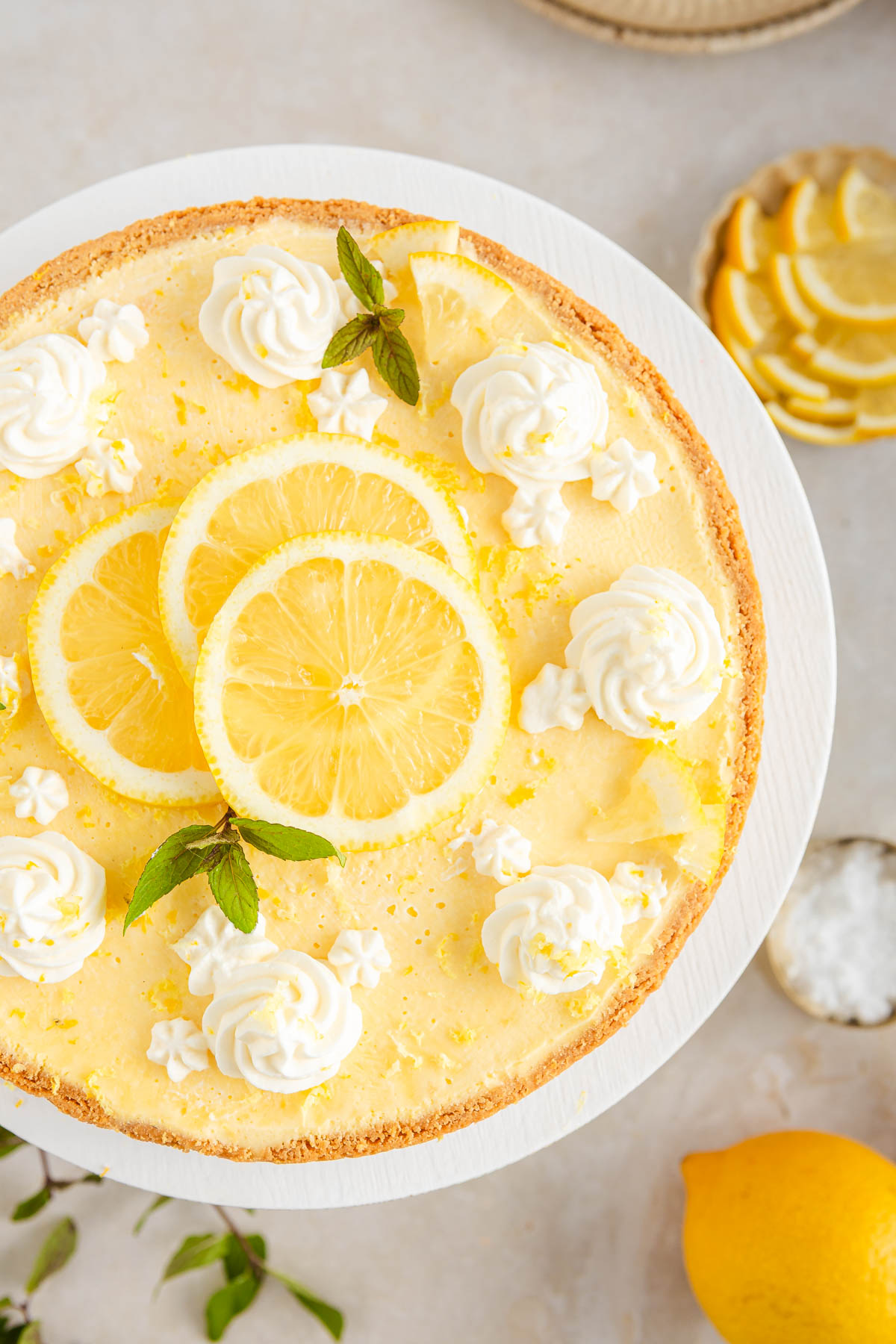
Transfer the cream cheese mixture to a piping bag and pipe small rosettes over the tart. Refrigerate until completely set and ready to serve. If you need to speed things up, chill the tart in the freezer for 10-15 minutes before transferring it back to the refrigerator.
Pro Tips
- Don't rush the chilling time. Chilling the almond flour pastry before baking makes it easier to handle, while chilling the finished tart gives the lemon filling time to set properly.
- Keep an eye on the temperature. Use a kitchen thermometer while cooking the lemon filling rather than guessing. Strain it at 105°F (40°C), then heat to 185°F (85°C) before adding the gelatin.
- Use fresh lemon. Both fresh juice and zest give the tart its bright, zingy citrus flavor. Bottled lemon juice won't give you quite the same result.
- Strain the filling. Don't skip this step. Removing the zest at the right stage gives the finished lemon filling a much smoother, silkier texture.
- For clean slices, warm your knife. Dip a sharp knife in hot water, wipe it dry, then slice. Clean and warm it again between cuts.
To avoid the almond crust falling apart, make sure you're using finely ground almond flour and don't leave out the egg yolk, which helps bind the pastry. The dough should hold together when pressed before you chill it.
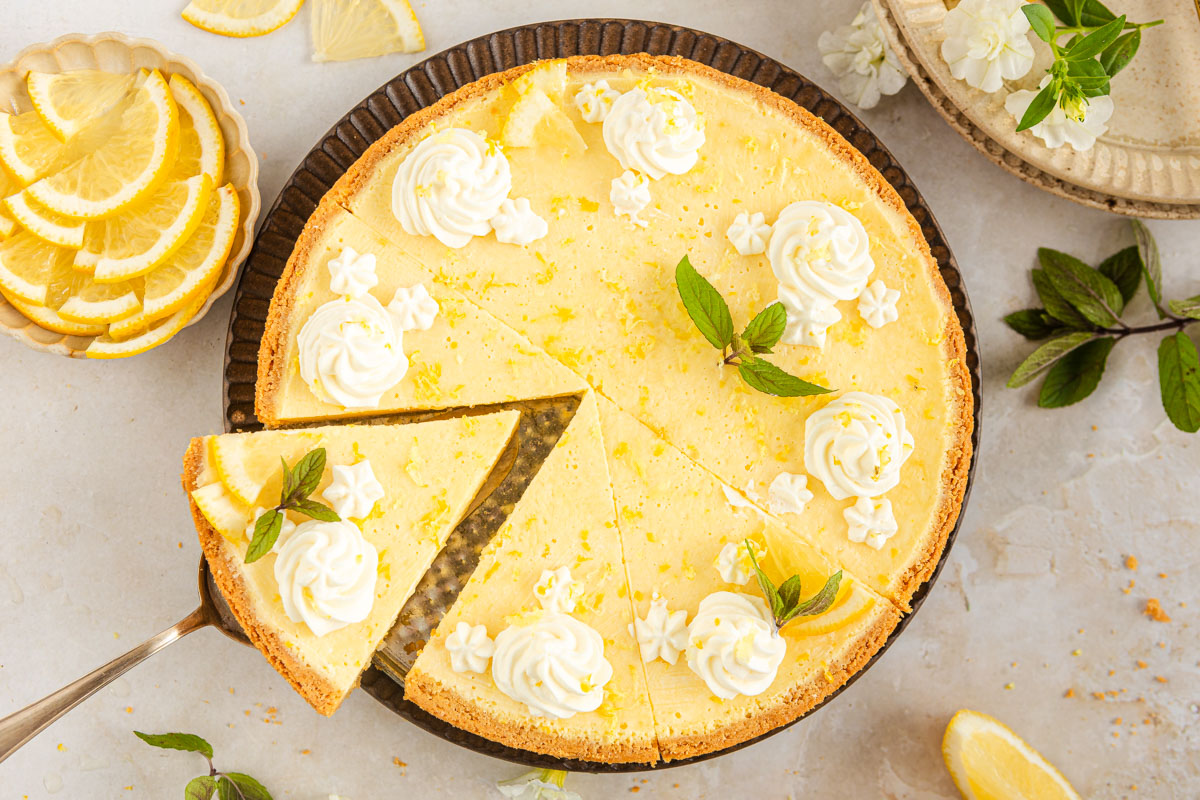

Sugar-Free Lemon Mousse Tart

Ingredients
The crust:
- 1.5 cups (150 g) almond flour (we used Sukrin Almond Flour and it worked perfectly)
- ½ cup (100 g) butter
- 1 egg yolk
- a pinch of salt
The filling cream:
- 7 oz (200 g) allulose
- 4 small/medium-sized lemons
- 4 eggs
- 10 oz (300 mL) heavy cream
- 6 sheets of gelatin
The topping cream:
- ½ cup (125 g) cream cheese
- 3.3 oz (100 g) heavy cream
- 2 oz (55 g) monk fruit sweetener
Instructions
Prepare the crust
- For the crust, you'll need a food processor with sharp blades.Add almond flour, a pinch of salt, allulose, and butter to the food processor container. Mix all the ingredients until thoroughly combined and the mixture resembles shortcrust pastry.
- Add the yolk, and mix to incorporate the yolk into the pastry.
- Remove the pastry from the container and form a ball using hands. Wrap into a food plastic wrap and refrigerate for 30 minutes.
- After 30 minutes, remove the pastry from the refrigerator and layer it in a baking pan, while pressing with your fingers against the bottom and sides of the baking pan. This recipe is tailored to a 21cm diameter baking pan. Perforate the bottom of the crust with a fork so the crust remains flat while baking and doesn't inflate.
- Refrigerate for another 15 minutes for the pastry to cool down. Meanwhile, preheat the oven to 180°C (355°F).
- Lay parchment paper on the pastry and pour rice or ceramic peas on top. It will prevent the pastry from rising during the cooking.
- Bake for 15 minutes.
- Take the crust out of the oven, remove the parchment paper carefully, and continue baking for another 5-7 minutes until golden brown.
- Take the crust out of the oven and set aside to cool down. Meanwhile, you can start preparing the filling cream.
Prepare the filling cream
- Add allulose, and lemon zest, and mix thoroughly in a small pot.
- Mix eggs and freshly juiced lemon juice into the allulose mixture.
- Add heavy cream and stir well. Start heating on low heat.
- Once the temperature of the mixture reaches 40°C (105°F), sieve it (to remove the zest), and continue heating until it reaches 85°C (185°F). Then, add gelatin.
- Turn off the heat and continue stirring for another 2-3 minutes to allow the gelatin to melt completely.
- Pour the mixture over the tart crust. Refrigerate for approx. 10 minutes (the top of the tart will have thickened slightly).
- Remove the tart from the refrigerator. Cut off the crust's sides that extend outside the filling cream level. As a result, you should have a leveled-out top of the tart.
- Take off the sides of the baking pan. Return the tart to the refrigerator while you prepare the topping cream.
Prepare the topping cream and decorate the tart:
- Mix cream cheese with monk fruit sweetener and heavy cream. Whisk until the mixture is thoroughly combined and uniform in texture.
- Transfer the cream to a pastry bag. Pipe the cream onto the tart.
- Serve refrigerated. If you're short of time, start by placing the tart into the freezer for about 10-15 minutes (at -18°C temperature), then transfer the tart to the fridge until serving.
Video
Notes
- Ensure your cream cheese and butter are at room temperature for smooth mixing
- Strain the filling: This removes any lumps and ensures a silky smooth texture
- Use a kitchen thermometer while cooking the lemon filling rather than guessing. Strain it at 105°F (40°C), then heat to 185°F (85°C) before adding the gelatin.
If you're looking to reduce your overall sugar intake, check out our "How To Reduce Added Sugar Intake (Family's Guide)" for more practical tips and strategies.
Here are some other incredibly delicious cakes for you to try:



Share your comments, rate, or ask a question!